
The Mountain Does Not Negotiate
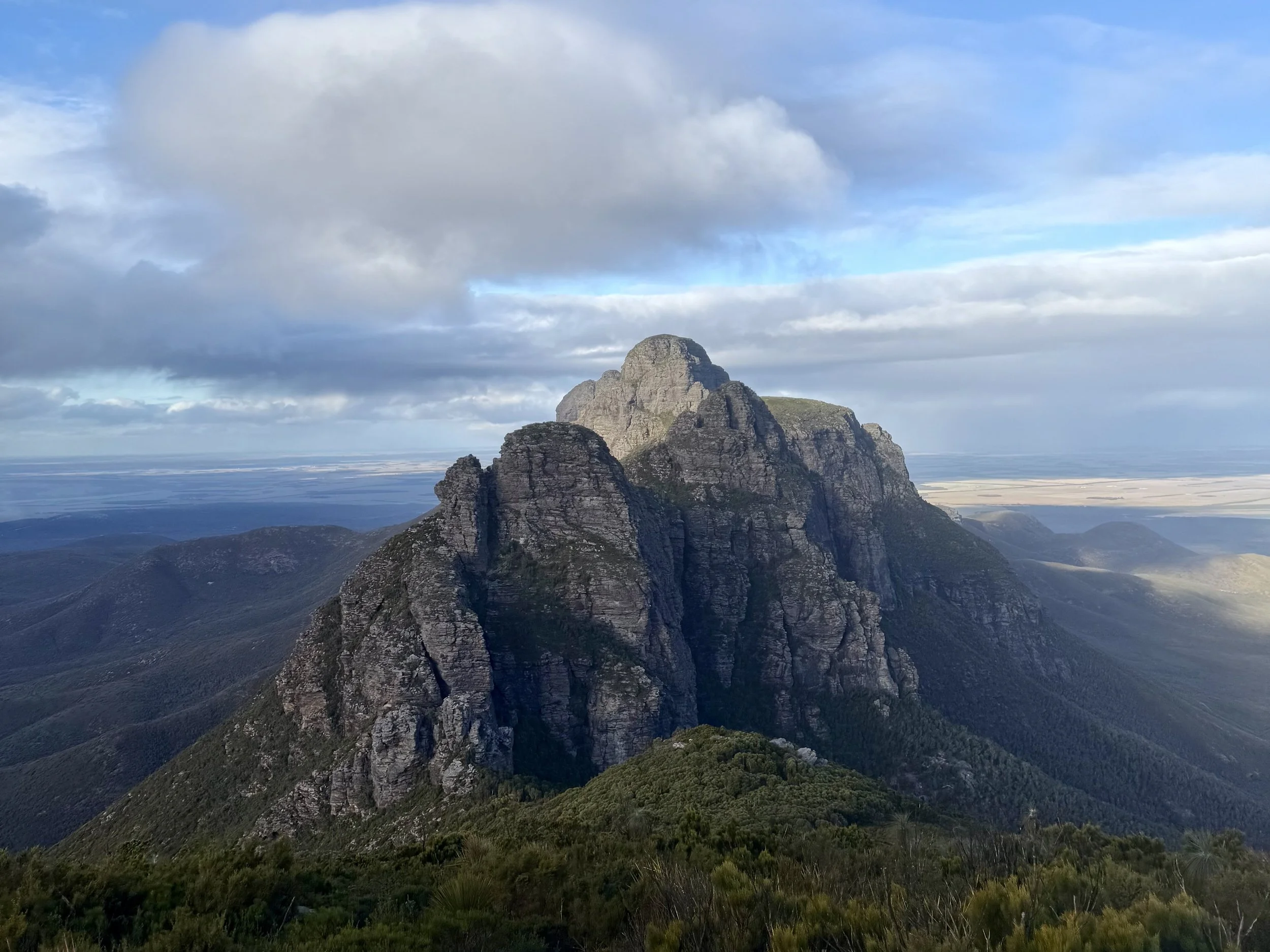
I have recently returned from an expedition across the Stirling Range Ridge Walk, widely regarded as Western Australia’s most difficult and unforgiving hike. This was my third attempt at the ridge and my first time guiding a group through the mountains, an experience that left me physically depleted, sharpened, and still processing what exactly the mountains can teach us humans.
To call the Stirling Ridge merely a “hike” feels inaccurate. The word itself almost softens the reality of what the range actually is. There are long sections where walking transitions into scrambling up loose rock, climbing, hauling yourself upward over jagged quartzite, navigating knife-edge ridges and slippery descents where one mistake could carry serious consequences. There is no clearly defined trail across most of the traverse, only fragmented spur tracks carved by previous hikers, many of whom were themselves disoriented or searching for safer passage through the stone. In poor weather, visibility vanishes in the mist and you can only see a few steps in front of you, and the mountain begins to feel less like terrain and more like an examination unfolding around you. And I think that is the nature of the ridge…..in that it examines you.
There was a moment of rock climbing up a muddy ascent where it felt like I put my life on the line, gripping a small tree root no thicker than my thumb. Hoping it would support my body weight as I lunged upwards. At this point with a heavy backpack I had a thought that my friends, with less experience, wouldn’t be able to make it up.
It tests the quality and organisation of your systems, your preparation, your fitness, your mindset, your ability to regulate yourself under pressure. It exposes weaknesses quickly. Your gear, pack weight, hydration strategy and foot placement matters. Presence, and a meditative awareness become integral because the mountain doesn’t give you space for distraction, ego, fantasy or carelessness. It is brutally honest and demands mindfulness.
There is a strong, severe and ancient masculinity in the energy of the range. Like a stern grandfather who offers respect only after effort and humility have been demonstrated properly. The mountain doesn’t care about your emotional state, it just is exactly as it is, and in that there is a stripped back honesty about who it is, and who/what you are.
I think this is one of the reasons I feel so drawn to the Stirling Range. Not because it is pleasurable or feels good at the time. Much of the experience is physically uncomfortable. You can spend hours soaked to the bone beneath freezing mist, hands numb from cold wind while navigating slippery rock faces carrying litres of water on your back because there is virtually none available on the ridge itself. In other seasons, when the clouds are clear, the exposed stone begins radiating heat upward like a kiln. The mountain can swing between elemental extremes without warning. I love this challenge and there is a concentration of aliveness and vitality here.
The Indigenous Noongar name most commonly associated with the Stirling Range is Koi Kyenunu-ruff, often translated as “mist rolling around the mountains.” Once you have stood upon the ridgelines watching cloud systems move through the peaks, the name makes sense. You can sit and observe the clouds like a movie or story passing by. The clouds are so much more tangible and intimate, full of character, light and darkness. The mist moves through the Mountains like the breath of a dragon. Entire valleys vanish and reappear within moments. Peaks emerge from cloud like islands surfacing from another world before disappearing again into whiteness.
Within Noongar cosmology, this mist was not understood as merely weather, but as spiritually alive. Some traditions speak of spirit-presences dwelling within the mountain cloud itself, and honestly, when visibility collapses and silence settles across the ridge, it becomes very easy to understand how such perceptions emerged from this landscape.
The highest peak, known colonially as Bluff Knoll, is called Bular Mial or Pualaar Miial in Noongar language, often translated as “many eyes” or “great many-faced hill.” The name refers to rock formations believed to resemble ancestral faces watching over the land. You can see it clearly in the mountains, like great Elders carved in to the stone gazing outward across Noongar Country.
Ecologically, the range is just as extraordinary as it is spiritually and physically imposing. The Stirling Range exists almost like a biological island rising unexpectedly from the surrounding plains. The region possesses subalpine characteristics rarely found elsewhere in Western Australia, with regular snowfall in winter and climatic conditions that often feel closer to Tasmania or the Australian Alps than to the landscapes people typically associate with WA.
The biodiversity held within these mountains is immense. Over 1,500 species of flowering plants exist within the park, making it one of the richest floristic regions on Earth. Entire ecological communities have evolved specifically around the altitude, ancient soils, cloud systems, and fire rhythms of the range, with many species existing nowhere else in the world. And when viewed against the wider backdrop of southwest Western Australia, much of which has been heavily cleared for agriculture over the last century, the Stirling Range begins to reveal itself as critical refuge. A surviving sanctuary for ecological systems that have vanished elsewhere.
This convergence of sacredness, ecological rarity, brutal terrain, and sheer atmospheric beauty is why the Ridge Walk has become a cult pilgrimage within the Australian hiking community. It becomes mythic in scope and people tend to speak more quietly and respectfully about the land after being on it….because the mountain humbles you.
After enough hours on the ridge, stripped of comfort, rhythm, routine, reception, convenience, and certainty, your awareness sharpens into a more animalistic and primal awareness. Things like hunger, warmth and water matter and you tap in to the fundamental primaries of life. There is very little fluff and abstraction left.
In an age of distraction in the neon-urban world, returning to the fundamentals of survival feels deeply invigorating. It is like a check-in with our consciousness, reminding us that there are aspects of life much bigger and more imposing than our own will, wants and desires. We are humbled and stripped back. We see our place in the universe more broadly.
I opened this expedition to a small group of close friends partly as a test, an exploration into whether the Stirling Ridge could one day become a commercial offering alongside my Way of the Serpent adventures through Natural Perspectives. The conclusion was no, it’s just too risky and dangerous.
Because the truth is that this mountain sits in an entirely different category to most hiking experiences. There are currently no operators guiding full Ridge Walk traverses, and after completing it again in this context, I understand why. The range is dangerous, ecologically sensitive, logistically difficult, and utterly uncompromising. A place like this demands professionalism at an extremely high level.
Having said that, there remains an iota within me that wonders - with the right people, the right systems, the right preparation, could something like this eventually exist? Not as casual tourism or adventure content, but as genuine expeditionary work approached with the seriousness and respect of alpine or Himalayan culture. Something rare. Something disciplined. Something requiring true readiness from everyone involved.
Part of me feels the mountain calling me toward a deeper level of leadership and responsibility through precisely this kind of challenge, into terrain that other operators have deliberately avoided. And another part of me believes that the ridge should simply remain what it already is – wild, difficult, dangerous, and largely untouched by commercial structure.
I’m still grappling and massaging out an answer to that question. As it currently stands, I simply know that the mountain remains with me in my body and nervous system. For now, the gentler rhythms of the Bibbulmun still feel like the right terrain for the work I am building through Natural Perspectives. Places where people can reconnect with earth, body, and spaciousness without the extreme demands of severe country.
And finally, a heartfelt thank you to Dave, Matt, Krystal, and Gwendolyn for sharing the mountains alongside me. Your resilience, humour, teamwork, and determination carried this expedition through every difficult section of the ridge. The mountain tested all of us, and together we met it honestly.
The Eco-Somatics of the Didgeridoo
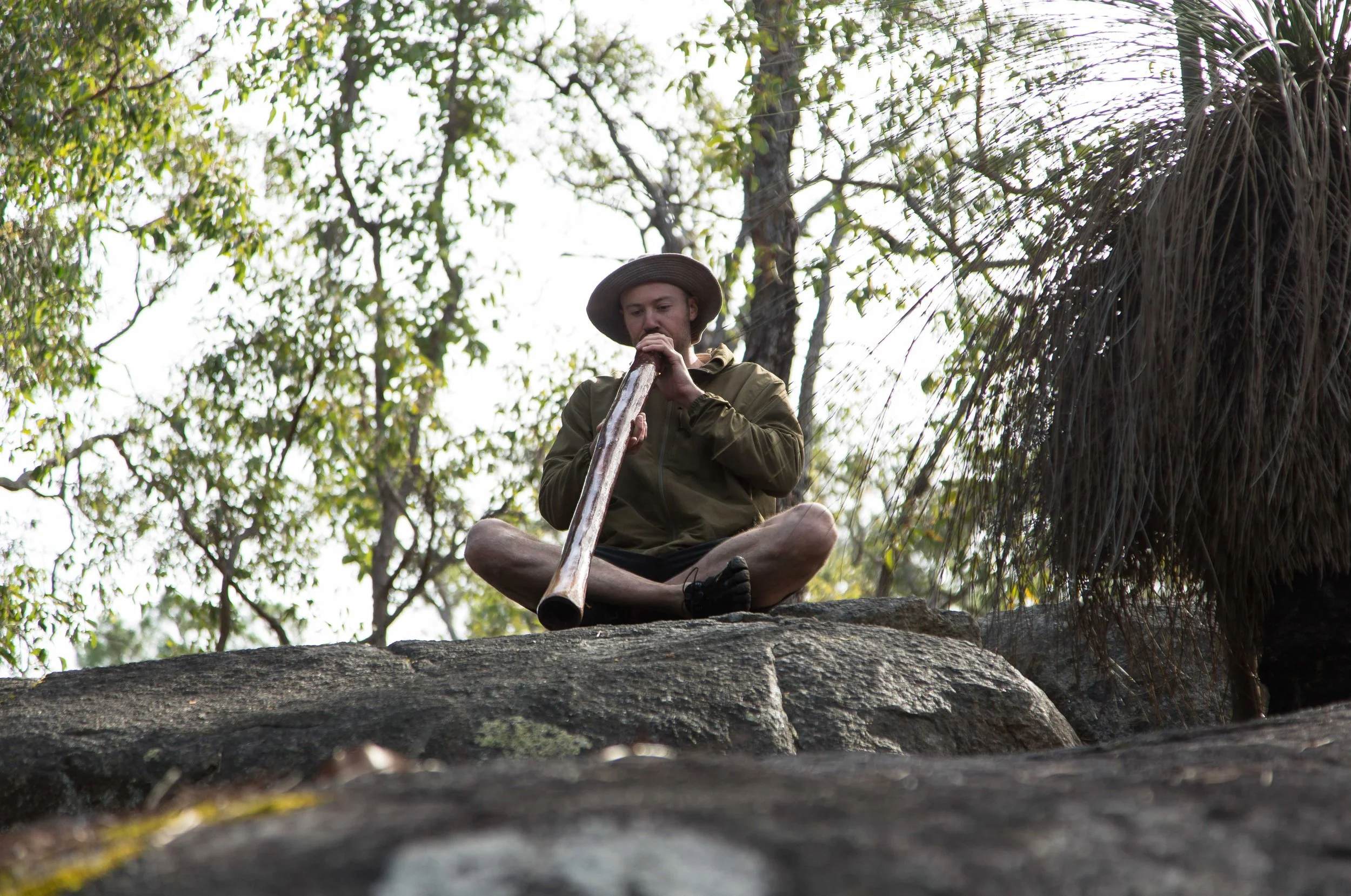
I did not come to the didgeridoo through music. Throughout school I struggled uphill with sheet music….the trumpet, the western analytical approach to sound. I was more sporty. Interested in the somatic. Moving my body on grassy fields and cross-country tracks. Feeling breath and body dance through space.
Later into my 20s I felt a gravitational pull toward the didgeridoo. The grounded presence of the teachers intrigued me. I resonated with how they spoke of it as a healing instrument that aligns the breath. I'd been practicing yoga for a couple of years by then, drawn to the power of breath and all the secrets it seemed to hold. I'd also just read a life-changing book called The Spell of the Sensuous by David Abram. I was deeply intrigued by pneuma, by breath, and how spirit is intimately woven with the air around us. So I picked up a cheap second-hand didge from Gumtree and started to learn.
Circular breathing was challenging. The didge went down and collected dust in the corner of my room for a year. Eventually I came back to it, got playful with the vibrations, and through intuition alone learned how to circular breathe. It's more accurately circular pressure, a cavity of breath held in the cheeks, blowing air out while simultaneously breathing in through the nose. That's what allows the continuous sound and vibration to occur.
That's the key thing about the didgeridoo. It is an intuitive instrument. An exploration of one's breath, how it moves through the body, how it's amplified outward. Historically, and still today, it was for men only to play.
When you play the didgeridoo, your body becomes the instrument. The jaw, throat, and soft palate vibrate in a way that relaxes muscle and releases stored tension. The soft palate and pharynx are rich in vagal nerve endings, and the low-frequency vibration of sustained drone playing essentially massages the vagus nerve directly. The great wandering nerve. The one that threads down from the brainstem through the heart, lungs, and gut. It is the nerve of rest, digestion, social connection. When it's stimulated, the nervous system downregulates. The body exhales at a cellular level.
The breath deepens. You shift out of the shallow thoracic breathing most of us default to and drop into true diaphragmatic breathing. The diaphragm doming downward on the inhale, creating negative pressure that draws air into the lower lobes of the lungs. As this happens, intra-abdominal pressure rises. The deep stabilising muscles fire, the transverse abdominis wrapping like a corset around the trunk, the multifidus along the spine, the pelvic floor below. The postural chain activating. Not through effort or instruction but through breath. The spine lengthens. The pelvis grounds. Posture reorganises itself around the spiral of the breath rather than being forced into it.
There's a sensation of a pillar pressing down through the esophagus, lungs, diaphragm, belly, pelvic floor. Anatomically, that's not far from what's actually happening. The column of pressure created by diaphragmatic breathing and sustained exhalation against resistance loads the entire fascial and muscular chain from throat to perineum. The internal organs held, moved, massaged. In more energetic terms - a deepening and broadening of the central channel, out through the perineum and into the earth.
From the earth it cycles back into the breath. Like a frontal microcosmic orbit, as it's known in Taoist alchemy. This process shifts further when you move through different postures. From a squat to relax the lumbar spine, or various yogic positions.
Playing at sunrise when things are just awakening carries a quieter, softer quality. Other times the breath dances with the wind, or sits alongside birdsong. The pillar of breath extends beyond the self in a kind of macrocosmic orbit, one's breath reaches the whole landscape. You are breathing the land and the land is breathing you. One is being breathed.
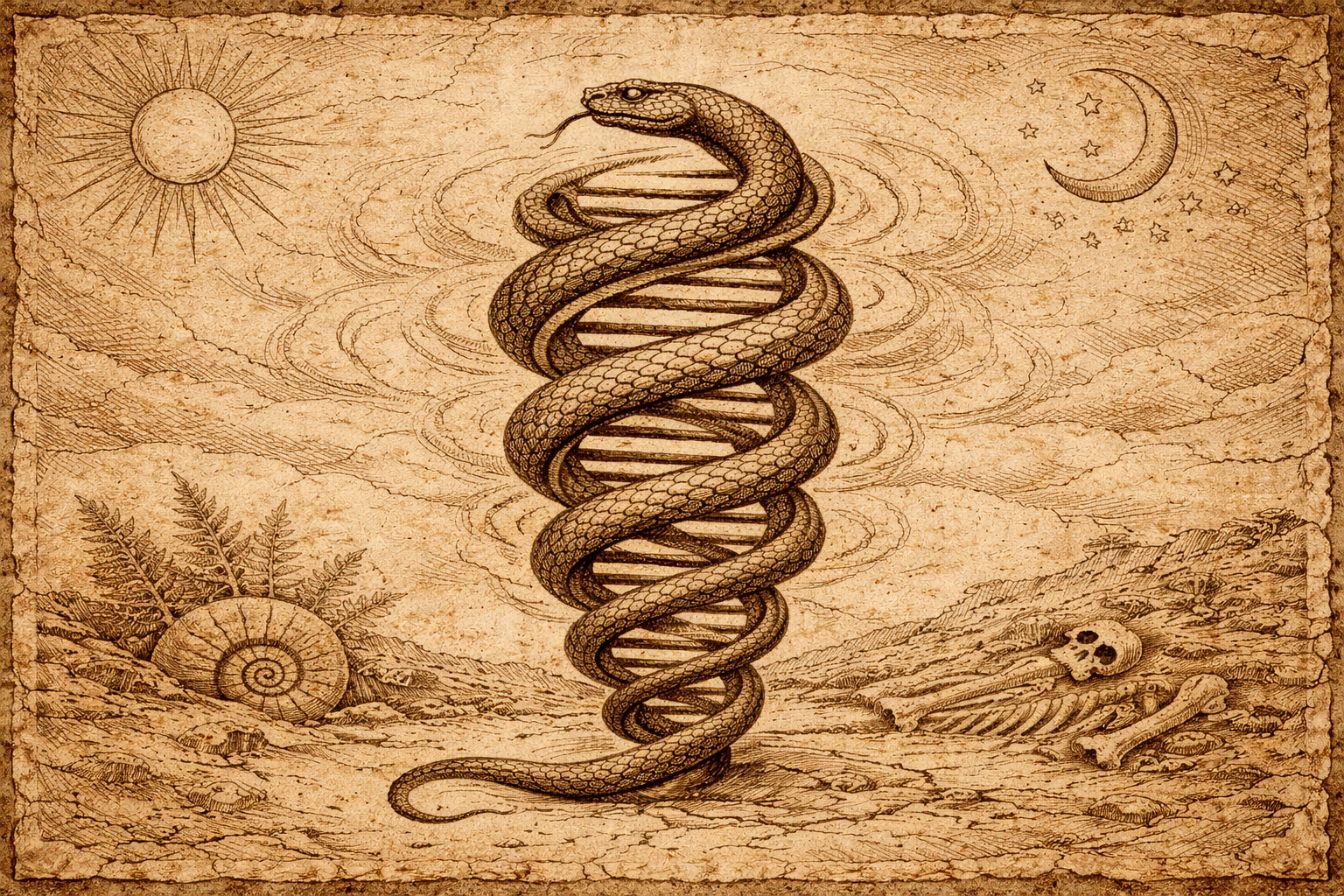
The land has its own rhythm. You have yours. This is the unity of self and other. A merging. The serpent that winds through both breath and land….the great cosmic serpent. The foundational pattern of life felt in all moments and all things. The DNA spiral, the corkscrew of life, felt in the cyclical process of playing.
This union is a vulnerable place to be. You are exposing the deepest parts of breath and body to the world in an act of communication and exchange. Far beyond performance. It can reach trance-like states, the dissolution of self into an ocean of vibration. The rigid boundaries of skin and self seen as illusion. The vibratory, wave-like nature of consciousness directly experienced.
It is a deep honour to play the didgeridoo and tremendous respect must be brought to it. There are many ethical nuances and complexities to this instrument and to didgeridoo-like instruments of other traditions. Some people don't even like to call it an instrument, but a tool, with many sacred aspects. I approach it as a student. Conscious that as someone who is not an Indigenous Australian, this path is to be walked with humility.
Many thanks to Jon from Sound of Hemp, maker of the hemp didgeridoo I carry. A deep relationship with the cycles and spirals of land and ocean, a lifetime of intention woven into the crafting of these breath staffs.
I love hiking and playing the didgeridoo together. The puffing and panting of ascending hills pairs naturally with the cyclical breath of playing. When hiking you are submerged in the sensorial, elemental world…no escaping it, the nervous system deeply enmeshed. In that space the didgeridoo becomes even more poetic and powerful. A deep osmosis happens out there.
The didgeridoo is a portal, a way of life, a master teacher. Less about sound and more about breath remembering itself. It teaches posture, alignment, rhythm, and humility.
An invitation: How does your breath dance with the wider world?
The Rhythm of the Cosmic Serpent
I’ve loved exploring rhythm lately. As a virtue, goal, dance style, way of life and everything in between. It’s like a north star for me, and at times feel like in an age of division and separation, that rhythm can be a unifying force that connects us all together. All playing different instruments in the grand symphony of life, all with different sounds but part of one greater and broader poly rhythm.
It is easy to see that in nature, everything has rhythm - the sun, moon, tides, plants, bees and beasts. Over millions of years of creative evolution, the unconscious has quietly danced and attuned itself to these eternal and reassuring rhythms of the cosmos, providing stability and patterns for consciousness to structure itself around. Neurologically, when I am in accord with these rhythms the conscious mind is soothed, feeding back information to me that is familiar rather than threatening.
To attune to these rhythms in the modern world is to attune to the cosmic patterns and wider macrocosmic experience of wholeness (and consequent oneness). Connecting with the eternal experience of rhythm also attunes us to the emotional experience of our ancestry. I resonate with the definition of rhythm by Lexi Eikelboom as “the intersection of organized patterns through temporal experience.”
Rhythm is what makes the shared experience of life in this dimensional structure possible. By keeping us aligned with a coherent flow of events, the feeling of past, present, and future delivers a deep sense of intimacy – a belonging within the unity of time and space, spirit and materiality, that all organisms living on the planet speak of through their gestures.
Rhythm is a sacred substance that connects and dances body, spirit, organisms and geography. In short, it is the way of nature – something which encompasses a structure within fluidity. Rhythm is what supports fluidity – giving space for playful and adventurous feelings of the inner child to emerge, freeing us from the serious asceticism from our modern world that denies and suppresses the wider cosmic rhythms. And when we can slip and slide between the rigid boxes and matrixes of modern neon culture, we attain a divine, graceful and angelic lightness and levity.
Rhythm names a mysterious dimension of existence in which I am embedded but do not control. Attending to rhythm makes the world and source/great mystery encountered in and through this world strange again, and reminds me what it means to be faithful to my identity as a creature.
I get in touch with this mystical feeling of rhythm mostly by walking, especially on the Bibbulmun Track. Day after day of long walks the legs find their own logic and the mind settles and just starts moving in a cyclical process. Sunrise, eat, sleep, walk, sunset, repeat. The horizon is doing what it always does with a slight little variation each time.
The Waugal is the symbol we follow on the Bibbulmun Track. It is the indigenous Noongar name for snake or serpent and is central to much lore about the land. The serpent also shows up in my Natural Perspectives logo beautifully crafted by Aimee Vandersteen. It is this intimacy with the serpent which is the inspiration behind the name ‘Way of the Serpent’ which is the three day guided bush walks I run for Natural Perspectives. The serpent has also been a symbol of kundalini and my inner journey as I have explored my central channel through pranayama, yoga, qi-gong and musical instruments. Needless to say the serpent has been close to me, as I unfurl deeper in to the rhythm of my being and life.
After a while the symbol of the serpent shows up in moments of symbiosis and synchronicity. I keep meeting it on trail markers, on rocks, in the shape of rivers. After a while the serpent stops feeling like a symbol and starts feeling like a presence. Something that knows about return. It is a gentle nudge and reminder that cycles, spirals and corkscrews are nearby.
This ecological exploration of rhythm is what has led me deeper in to the path of music, sound and the bardic path. I’ve carried the didgeridoo and the Native American flutes whilst hiking for many years now. Out here the playing becomes something else entirely. You put the instrument to your mouth and the birds are already mid-sentence. The wind is already in the middle of something. You're not performing. You're joining. Rhythm held by the whole place, all at once, and you're just finding your part in it. Insects. Breath. The creak of a tree somewhere. Nobody is conducting this.
That is what is so liberating about rhythm. It is not something you impose upon the world but something you fall back in to, something you surrender in to. It is so somatic because the ancient primal body knows it before the modern intellect can get a hold of it. It comes from feet on the ground and the breath in the lungs. It is the old pulse of the universe that underlies everything, running like a current. Or a serpent winding through the fabric of the universe.
Looking towards the ancient Greeks, they had the word Rhuthmós. It meant shape in motion, something that shifts yet holds at the same time. Like a wave or a season. Ecologies run on this. Things repeat in patterns but they never are exactly the same.
Zooming in on the alchemists, they had the symbol of the Ouroboros, which is the serpent swallowing its own tail. It represents consumption and renewal as one process. The end folding back into beginning. Many indigenous cultures viewed life cyclically and it is only in more modern urban times that we have seen the world through such a linear lens. What I love about the ouroboros and the cyclical symbology of life is that it shifts our perspectives towards more matriarchal systems; which has been lost in an age of patriarchal reductionist, materialism and hyper-rationality. More on that for another journal post.
In summary, the serpent and rhythm has been a close ally and guide. Teaching me to stop interfering, managing, optimising and trying to get somewhere all the time. It reminds me to read the ground and stay close to the Earth. To listen to the quiet vibrations and honour the cycles and seasons of life.
Way of the Serpent bush walks are mostly sold out for this season, and I’m stoked to share the beauty of rhythm with you all this season. These hike are an invitation to stop walking in straight lines. To let the pattern underneath things become audible again. May we all walk the way of the Waugal.
The Alchemy of Hip-Hop
This week in Melbourne I stepped back into AmentiWorld for a five-day intensive, building on a two-day workshop I did with them earlier in the year in Perth. I already knew their work goes deep, so I wasn’t surprised by the impact, but there was something about being in the container again, with that collective, that opened a different kind of current. Before I get into my own experience, it’s worth giving a sense of who AmentiWorld actually are, because they’re not a typical movement school. They’re a community-based collective blending hip hop, Jungian psychology, somatic practice and ancient symbolic knowledge. Their approach is archetypal, elemental, embodied, and everything is done in groups because community is the architecture of the work. Movement becomes a mirror, and the body becomes a way of seeing. Nothing about it is performance, it’s psyche and soma and culture braided into one.
Stepping into that space felt like entering a lineage I didn’t realise I’d been orbiting for years. And it landed in an interesting way because on the Bibbulmun Track people know me as The Alchemist. The name stuck because hiking has always been where I explore the elements of nature and how they shape me, almost like the bush turns into an open-air laboratory. The forests, the weather, the terrain, all of it works on you in quiet, consistent ways, and walking becomes a slow act of transmutation, each step breaking something down and reshaping something else.
But this week was a completely different kind of portal. Instead of valleys and granite it was wooden floors, potent music, sweat, heat and bodies moving with intent. AmentiWorld opened the door and Gil walked me straight into initiation, not just into dance technique or choreography, but into hip hop as an elemental lineage. And that’s the part that struck me. I wasn’t learning moves. I was learning how to conjure, how to enter states, how to let movement speak from somewhere far older and grittier than thought.
The days followed the five elements. Earth as the layer of physicality, weight, shape, taking up space. Water as articulation, sensation, effort, the emotional residue living inside joints and muscle memory. Fire as direction and agency, the intensity that clarifies rather than destroys. Air as the social field and relational winds between people. Ether as imagination, symbols, the inner library. A perfect balance of theory and physicality, but never as ideas to sit with. These weren’t concepts, they were states. You stepped into them or they stepped into you.
Earth was a workout. Real grounding. Moving through space with weight in my bones, feet like drums hitting out a rhythm I could actually trust. Water opened the joints and pulled up sensation I didn’t know I’d been holding. Fire took me the furthest. Fast limbs, sharp breath, crumping patterns, grabbing, pushing, stomping, all of it anchored by that potent bass. It was dark, dirty and danky in the best possible way, and it pushed a part of me I didn’t realise was so ready to wake up. Air softened things again, reminding me that identity isn’t created alone, it’s created in the currents between people. Ether tied it all together, slow motion shapes, symbolic movement, tapping into imagination and pattern in a very grounded way.
Somewhere in the middle of all that heat and rhythm, something important switched on. Not a collapse of tension or a clean, spiritual softness, but the opposite. A permission to feel the tension that’s already there and move with it. A permission to be powerful. To move with intensity. To go fast. To stop hiding the parts of myself that feel raw or sharp or messy. It gave those edges a place to move instead of sit in my system like static.
What surprised me was how much of myself has been outside the frame of what I consider acceptable in the modern, polished world. The softer spiritual environments I spend time in have taught me a lot about stillness, but they haven’t always given much room for the darker, heavier, more chaotic parts of my expression. AmentiWorld did. Hip-hop did. The heat, the bass, the sweat, the aggression, it all made sense once I started moving inside it. I could feel parts of myself I’d sidelined, not because they were wrong but because they didn’t have anywhere to go. This week they had space.
I walked out of those five days feeling more expressive, more raw, more dark, more dingy, and a whole lot more alive. Not in a metaphorical way, in a very physical way, like my bandwidth for being a full human being just widened. My rough edges feel less like a problem now and more like fuel. The stuff creativity is born from. The stuff that gives movement its pulse.
If movement or dance or AmentiWorld are calling you in any way, or if you just have that intuitive hunch in your gut, check out their work. It is genuinely profound. Revolutionary in how it brings people back into their bodies, their power, their history, their imagination.
Massive thanks to the AmentiWorld crew. Gil, the walking hieroglyph. Alana. Kamile. Ruben. Elia and Neder. Legends. See you fellow alchemists in Bali in late January for the next round of teachings and co-creations.